The painter
Caravaggio's year in Malta
Why Caravaggio came to Malta in 1607, what he painted for the Knights, and how a knighthood ended in arrest, escape and expulsion within about a year.
Book the Caravaggio performance ↗Quick answer
Caravaggio reached Malta in 1607, a fugitive from a death sentence in Rome, hoping the Order of St John's Grand Master could help him win a pardon. Alof de Wignacourt made him a knight and the Order's painter, and he produced his largest canvas, The Beheading of Saint John the Baptist, in 1608. By late August 1608 he was arrested, he escaped, and by December the Order had expelled him.
The short version
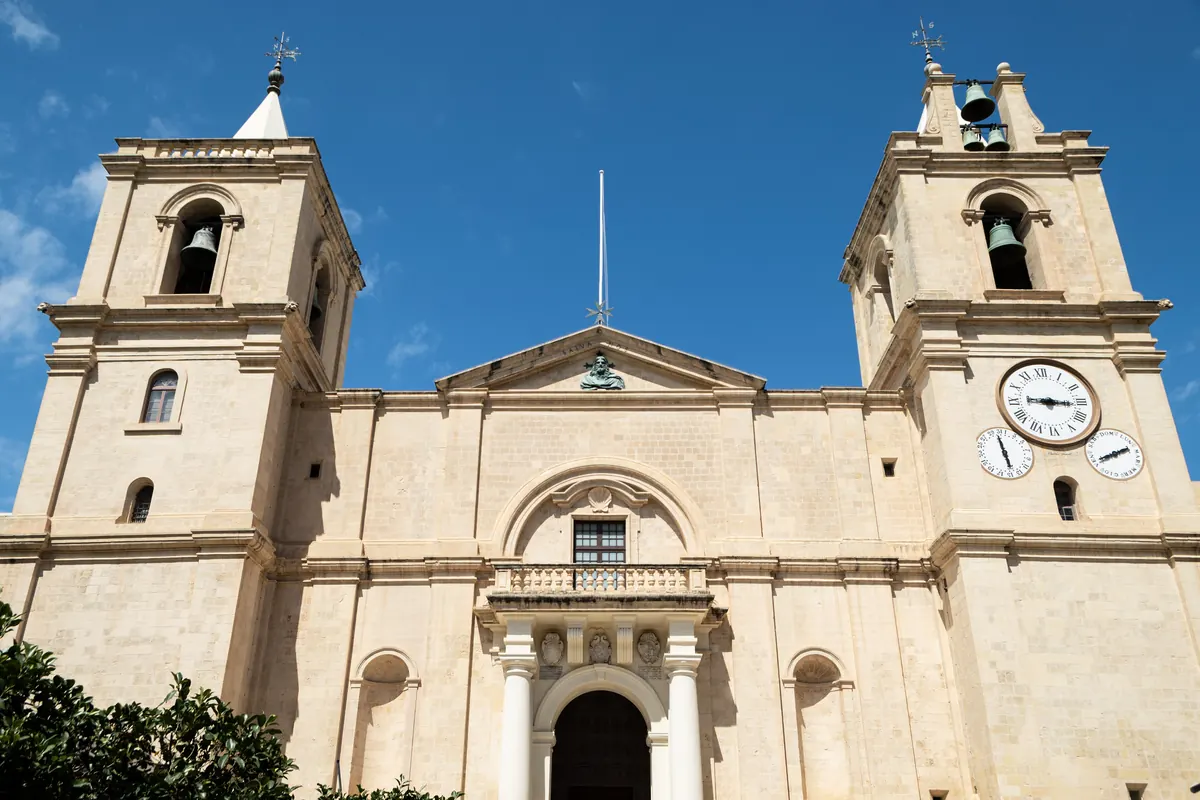
Wikipedia says Caravaggio travelled to Malta and on to Sicily in 1607 and was pursuing a papal pardon for his sentence. In Malta he was inducted as a knight of the Order of St John, painted his largest work and then, by late August 1608, was arrested and imprisoned. He escaped, and by December the Order had expelled him. The whole stay lasted roughly a year, and what remains of it hangs in the cathedral in Valletta.
Why he left Rome
Wikipedia says Caravaggio was a celebrated painter in Rome and also a violent and provocative man. He killed Ranuccio Tomassoni in a brawl in 1606, which brought a death sentence for murder and forced him to flee. He went first to the estates of the Colonna family south of Rome and then to Naples, where, protected by the Colonnas and outside the Roman authorities' reach, the most famous painter in Rome became the most famous in Naples.
Why Malta
Wikipedia says that after only a few months in Naples he left for Hospitaller Malta, the headquarters of the Knights of Malta. Fabrizio Sforza Colonna, a Knight of Malta and general of the Order's galleys, appears to have helped his arrival. Wikipedia adds that Caravaggio probably hoped the patronage of the Grand Master, Alof de Wignacourt, would help him secure a pardon.
Knight and court painter
Wikipedia says Wignacourt was so impressed at having the artist as painter to the Order that he inducted him as a knight, and that the early biographer Bellori records the painter as well pleased with his success. Wignacourt was the 54th Grand Master, in office from 1601 to 1622, and Wikipedia describes him as popular with the Maltese people. Wikipedia remembers him mostly for his aqueduct and his coastal towers, and dates his patronage of Caravaggio from the artist's arrival in 1607 to the arrest and expulsion of 1608.
What he painted in Malta
Wikipedia lists the major works of the Malta period as the Beheading of Saint John the Baptist, his largest work and the only painting he signed, Saint Jerome Writing, both now in St John's Co-Cathedral, and a portrait of Alof de Wignacourt and his page, as well as portraits of other leading knights. The Beheading was commissioned by the Knights as an altarpiece and completed in 1608. The next guide on this site takes the canvas apart.
Read next: The Beheading, explained
Arrest, escape and expulsion
Wikipedia says that by late August 1608 Caravaggio was arrested and imprisoned, likely after another brawl, this time with an aristocratic knight in which the door of a house was battered down and the knight seriously wounded. The Knights held him in Valletta, but he managed to escape. By December he had been expelled from the Order as a foul and rotten member, a formal phrase used in all such cases. The ceremony took place in the Oratory.
After Malta
Wikipedia says he made his way to Sicily, where he painted for Syracuse and Messina, then returned to Naples in the late summer of 1609. In October 1609 he was involved in a violent clash that left his face disfigured, and he painted a Salome with the Head of John the Baptist that he sent to Wignacourt as a plea for forgiveness. He died on 18 July 1610, on his way from Naples to Rome, and the cause of his death is still debated.
What survives in Valletta
The Beheading and Saint Jerome Writing both hang in the Oratory of St John's Co-Cathedral. Wikipedia says Saint Jerome Writing was cut from its frame and stolen from the cathedral in December 1984 and recovered two years later. The Beheading was restored in Florence in the late 1990s, according to the article on the cathedral. Both pictures can be seen on a daytime visit, and the evening performance is staged in front of the first.
How the evening uses this story
The evening performance is built on the cathedral's history, and reviewers on the booking page describe a narrator who speaks of the first stone of the cathedral, the siege and Caravaggio's arrival, and then leads into the painting. The booking page describes the narrator as a character, Fra Bartolomeo, and not as Caravaggio himself. Treat the dramatised version as an introduction, and use Wikipedia's account, summarised here, as the record.
Read next: Caravaggio concert in Valletta
Who this isn't for
This is a short account of one year, not a biography. If you want the Roman years, the Naples paintings or the debate over his death, read a full life of the painter. It also does not settle the scholarly arguments Wikipedia notes, for example over the exact wording of the signature, which the next guide covers. Anyone who needs a single definitive reading should turn to a specialist study of Caravaggio in Malta.
Frequently asked questions
When did Caravaggio come to Malta?
In 1607, according to Wikipedia, as a fugitive from a death sentence in Rome who hoped for a papal pardon.
Was Caravaggio really a knight?
Yes. Wikipedia says Grand Master Alof de Wignacourt inducted him as a knight, impressed at having him as the Order's painter.
Why was he expelled?
Wikipedia says he was arrested by late August 1608, likely after a brawl with a knight, escaped from prison, and was expelled in December as a foul and rotten member.
What did he paint in Malta?
The Beheading of Saint John the Baptist, Saint Jerome Writing and a portrait of Alof de Wignacourt and his page, among others.
Where can I see his work in Valletta?
The Beheading and Saint Jerome Writing hang in the Oratory of St John's Co-Cathedral.
Sources